
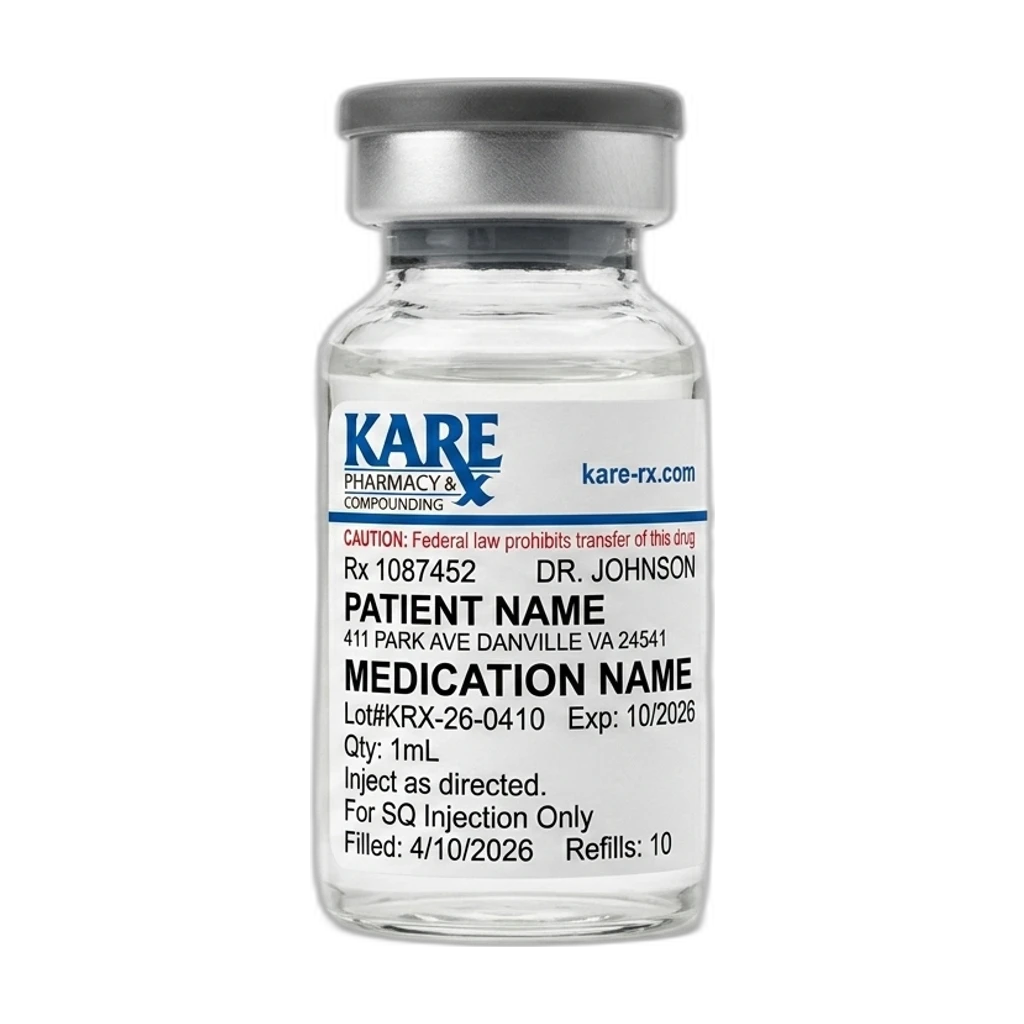
Pricing & Options
Sign in to see instant pricing
Available Strength
Active Ingredients
Important Disclaimer
These statements have not been evaluated by the Food and Drug Administration (FDA). Compounded products are not FDA-approved and are not intended to diagnose, treat, cure, or prevent any disease. Individual results may vary. The information provided is for educational purposes only and should not be considered medical advice. Always consult with your healthcare provider before starting any new treatment.
Clinical Information
Evidence-based details for healthcare providers
Use only as directed by your healthcare provider. The dose depends on the reason for use, the area being treated, your age, your weight, and your overall health. This medicine is usually given by a healthcare professional in a clinic, office, or hospital. Do not try to inject this medication yourself unless your provider has clearly trained you to do so. If you miss an appointment for treatment, contact your provider for instructions.
Lidocaine works by blocking sodium channels in nerve cells. This stops pain signals from traveling from the treated area to the brain. When used for numbing, it often starts to work within a few minutes, and the numbing effect may last about 30 minutes to a few hours depending on the dose, the site of injection, and whether it is used with other medicines such as epinephrine. Patients usually notice reduced pain, burning, or discomfort in the treated area soon after it is given.
Lidocaine Hydrochloride Injection is contraindicated in patients with a known hypersensitivity to lidocaine or to any local anesthetics of the amide type or to other components of Lidocaine Hydrochloride Injection.
Lidocaine may interact with other medicines that affect heart rhythm or slow the heart, such as amiodarone, sotalol, mexiletine, beta blockers like metoprolol, or calcium channel blockers like verapamil. These interactions can be moderate to serious and may increase the risk of dizziness, low blood pressure, slow heartbeat, or abnormal heart rhythm, so your provider may need to monitor you closely. Medicines that affect liver enzymes, such as cimetidine, some seizure medicines, or certain antibiotics, may change how lidocaine is broken down in the body. Other numbing medicines or antiarrhythmic drugs may increase the chance of side effects if used together. Alcohol, sedatives, or opioid pain medicines may worsen sleepiness or lightheadedness after treatment. Tell your provider about all prescription drugs, over-the-counter medicines, vitamins, and herbal products before receiving lidocaine.
The following clinically significant adverse reactions have been reported and described in the Warnings and Precautions section of the labeling: The following adverse reactions from voluntary reports or clinical studies have been reported with lidocaine or lidocaine and epinephrine. Because many of these reactions were reported voluntarily from a population of uncertain size, it is not always possible to reliably estimate their frequency or establish a causal relationship to drug exposure. Adverse reactions to Lidocaine Hydrochloride Injection are characteristic of those associated with other amidetype local anesthetic. A major cause of adverse reactions to this group of drugs is excessive plasma levels, which may be due to overdosage, unintentional intravascular injection, or slow metabolic degradation. The most commonly encountered acute adverse reactions that demand immediate counter measures were related to the CNS and the cardiovascular system. These adverse reactions were generally dose-related and due to high plasma levels which may have resulted from overdosage, rapid absorption from the injection site, diminished tolerance, or from unintentional intravascular injection of the local anesthetic solution. In addition to systemic does-related toxicity, unintentional intrathecal injection of drug during the intended performance of caudal or lumbar epidural block or nerve blocks near the vertebral column (especially in the head and neck region) has resulted in underventilation or apnea (“Total or High Spinal”). Also, hypertension due to loss of sympathetic tone and respiratory paralysis or underventilation due to cephalad extension of the motor level of anesthesia haveoccurred. This has led to secondary cardiac arrest when untreated. When used for dental injections, paresthesia of the lips, tongue, and oral tissues have been reported. Persistent paresthesia lasting weeks to months and, in some instances, lasting greater than one year, have also been reported. Adverse reactions were characterized by excitation and/or depression of the central nervous system and included lightheadedness, nervousness, apprehension, euphoria, confusion, dizziness, drowsiness, tinnitus, blurred or double vision, vomiting, sensations of heat, cold or numbness, twitching, tremors, convulsions, unconsciousness, respiratory depression and arrest.Nervous System Disorders The incidences of adverse reactions associated with the use of local anesthetics may be related to the total dose of local anesthetic administered and are also dependent upon the particular drug used, the route of administration and the physical status of the patient. In a prospective review of 10,440 patients who received lidocaine hydrochloride for spinal anesthesia, the incidences of adverse reactions were reported to be about 3 percent each for positional headaches, hypotension and backache; 2 percent for shivering; and less than 1 percent each for peripheral nerve symptoms, nausea, respiratory inadequacy and double vision. Persistent motor, sensory and/or autonomic (sphincter control) deficit of some lower spinal segments with slow recovery (several months) or incomplete recovery have been reported in rare instances when caudal or lumbar epidural block has been attempted. Backache and headache have also been noted following use of these anesthetic procedures. There have been reported cases of permanent injury to extraocular muscles requiring surgical repair following retrobulbar administration. In the practice of caudal or lumbar epidural block, unintentional penetration of the subarachnoid space by the catheter or needle has occurred. Subsequent adverse effects may have depended partially on the amount of drug administered intrathecally and the physiological and physical effects of a dural puncture. A high spinal has been characterized by paralysis of the legs, loss of consciousness, respiratory paralysis, and bradycardia. Neurologic effects following epidural or caudal anesthesia have included spinal block of varying magnitude (including high or total spinal block); hypotension secondary to spinal block; urinary retention; fecal and urinary incontinence; loss of perineal sensation and sexual function; persistent anesthesia, paresthesia, weakness, paralysis of the lower extremities and loss of sphincter control, all of which had slow, incomplete, or no recovery; headache; backache; septic meningitis; meningismus; slowing of labor; increased incidence of forceps delivery; and cranial nerve palsies due to traction on nerves from loss of cerebrospinal fluid. Neurologic effects following other procedures or routes of administration have included persistent anesthesia, paresthesia, weakness, paralysis, all with slow, incomplete, or no recovery. Incidence varied with the procedure used and the total dose administered. In a survey of studies of epidural anesthesia, overt toxicity progressing to convulsions occurred in approximately 0.1% of local anesthetic administrations. The incidences of adverse neurologic reactions associated with the use of local anesthetics may be related to the total dose of local anesthetic administered and are also dependent upon the particular drug used, the route of administration, and the physical status of the patient.Convulsions: High doses or unintentional intravascular injection have led to high plasma levels and related depression of the myocardium, decreased cardiac output, heartblock, hypotension, bradycardia, ventricular arrhythmias, including ventricular tachycardia and ventricular fibrillation, and cardiac arrestCardiac Disorders: [see]. Immune System Disorders Allergic reactions are characterized by cutaneous lesions, urticaria, edema or anaphylactoid reactions. Allergic reactions may occur as a result of sensitivity either to local anesthetic agents or to the methylparaben used as a preservative in the multiple dose vials.[see]. There have been no reports of cross sensitivity between lidocaine hydrochloride and procainamide or between lidocaine hydrochloride and quinidine. Hematologic Methemoglobinemia[See]. • Dose-Related Toxicity[see] • Methemoglobinemia[see] • Chondrolysis with Intra-Articular Infusion[see] • Severe, Persistent Hypertension, Cerebrovascular Accidents, and Bradycardia Due to Drug Interactions[see] • Allergic-Type Reactions[see] • Systemic Toxicities with Unintended Intravascular or Intrathecal Injection[see • Respiratory Arrest Following Retrobulbar Block[see
Store at controlled room temperature (68-77 degrees F / 20-25 degrees C) unless the product label states otherwise. Protect from excessive heat, freezing, and direct light. Keep in the original carton until use when possible. Do not use if the solution is cloudy, discolored, leaking, or contains particles. Keep out of reach of children and pets. Because this is an injection product, unused or expired medicine should be disposed of through a pharmacy, clinic, or approved medical waste program and should not be placed loosely in household trash.
Frequently Asked Questions
What is lidocaine injection used for?
Lidocaine injection is used to numb an area of the body so medical procedures are less painful. It may also be used by healthcare professionals in certain hospital settings for heart rhythm problems, but patients should use it only for the approved reason given by their provider.
How fast does lidocaine injection work?
It usually starts working within a few minutes after it is injected. The numbing effect often lasts from about 30 minutes to a few hours, depending on where it is used and how much is given.
Will the injection itself hurt?
You may feel a quick pinch, pressure, or mild burning when the medicine is injected. This feeling is usually brief, and the area should begin to feel numb soon after.
What side effects should I watch for after getting lidocaine injection?
Mild redness, swelling, bruising, or temporary numbness are common. Get medical help right away if you have trouble breathing, chest pain, severe dizziness, seizure, fainting, or swelling of the face or throat.
Can I drive after receiving lidocaine injection?
It depends on where the injection was given and how you feel afterward. If you feel dizzy, sleepy, weak, or have numbness that affects movement, do not drive or use machinery until the effects have fully worn off.
Can lidocaine injection be used during pregnancy or while breastfeeding?
Your healthcare provider will decide if it is appropriate based on your medical needs. Be sure to tell your provider if you are pregnant, planning to become pregnant, or breastfeeding before treatment.
Related Products
Diltiazem | Lidocaine Ointment
This compounded ointment combines diltiazem 2% and lidocaine 3% to ease pain and help healing in the anal area. Diltiazem relaxes the tight muscle around the anus, which can improve blood flow and reduce pressure on fissures or hemorrhoids. Lidocaine provides fast numbing relief so you feel less burning, itching, or pain while the area heals. Your healthcare provider may prescribe this ointment when over-the-counter treatments have not given enough relief.
Ketamine | Ketoprofen | Gabapentin | Clonidine | Lidocaine Cream
This compounded cream combines five active drugs that work together to help ease nerve and muscle pain when applied to the skin. It is made for patients who have chronic pain that has not improved with single-drug treatments. Because the medicine stays mostly in the skin and tissues where it is applied, it may lower the chance of whole-body side effects seen with oral pain pills.
Diazepam | Gabapentin | Baclofen | Lidocaine Cream
Diazepam | Gabapentin | Baclofen | Lidocaine Cream is a compounded topical preparation used in pain-management regimens when a prescriber wants a customized combination of ingredients in a topical base. Lidocaine is a local anesthetic that can help reduce sensation at the application site, while gabapentin, baclofen, and diazepam are ingredients commonly selected by prescribers for treatment plans involving nerve-related discomfort, muscle tightness, or spasm.
Ketoprofen | Gabapentin | Baclofen | Lidocaine Cream
A compounded topical cream that combines an anti-inflammatory drug (ketoprofen), two nerve and muscle pain modulators (gabapentin and baclofen), and a local anesthetic (lidocaine) to help relieve localized muscle, joint, and nerve pain without the need for high-dose oral medicines.