
Pricing & Options
Sign in to see instant pricing
Available Strength
Important Disclaimer
These statements have not been evaluated by the Food and Drug Administration (FDA). Compounded products are not FDA-approved and are not intended to diagnose, treat, cure, or prevent any disease. Individual results may vary. The information provided is for educational purposes only and should not be considered medical advice. Always consult with your healthcare provider before starting any new treatment.
Clinical Information
Evidence-based details for healthcare providers
A valid prescription from a DEA-registered prescriber is required.
Limited to 5 refills within 6 months of the original prescription date.
Subject to state and federal controlled substance regulations.
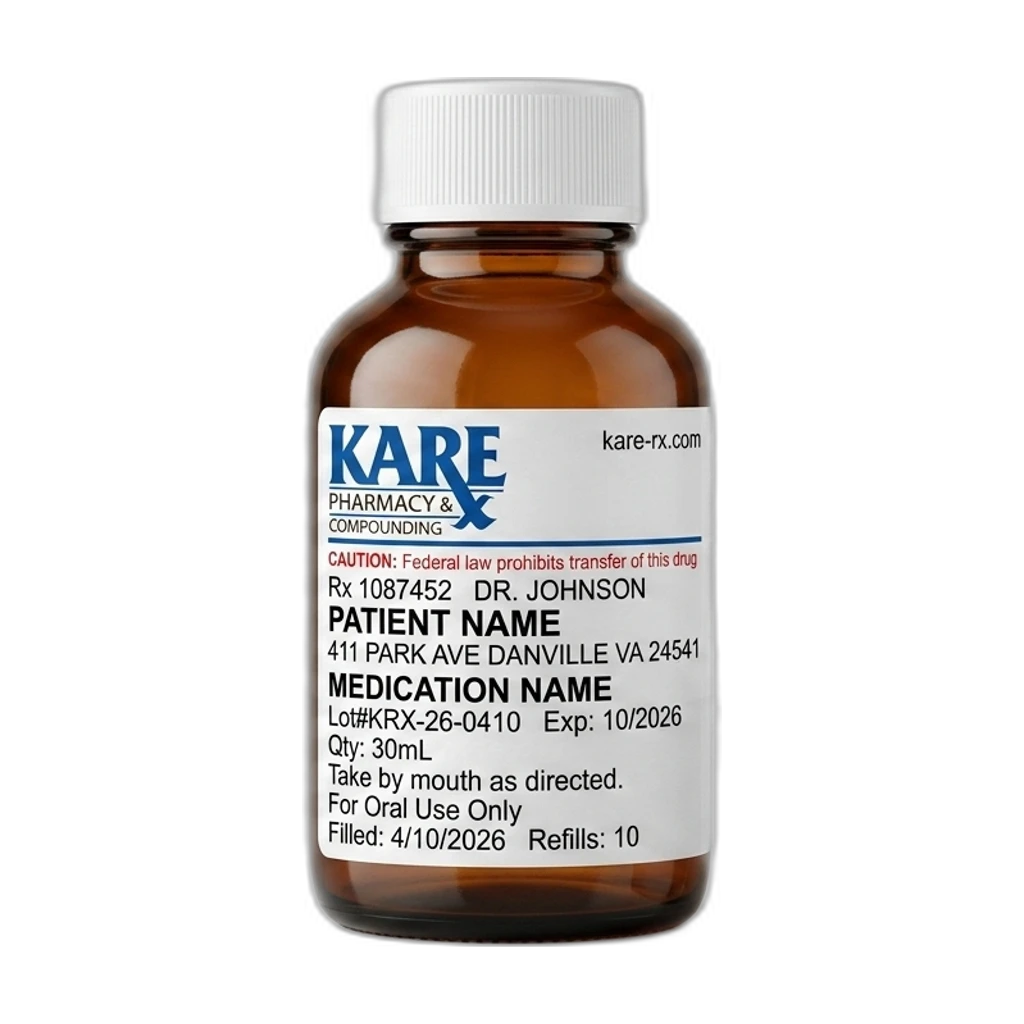
For oral use only. Use exactly as directed by the prescribing veterinarian. Measure each dose carefully with the dosing device provided. If you miss a dose, give it as soon as you remember unless it is close to the next dose; do not give two doses at the same time. Cap tightly after each use and keep out of reach of children.
Gabapentin helps calm overactive nerve signaling. It attaches to specific calcium channels in the nervous system and lowers the release of certain chemical signals that can increase pain or nerve sensitivity. In veterinary patients, this may help reduce signs linked to nerve pain and may also be used by a veterinarian in certain cases where calming abnormal nerve activity is desired. Effects often begin within a few hours after a dose, but the full benefit depends on the condition being treated and the dosing plan set by the veterinarian.
Do not use if your bird has had an allergic reaction to gabapentin or any part of the compounded formula. Do not use unless it has been specifically prescribed by a licensed veterinarian for that individual animal. Use with extra caution and only under veterinary supervision if your bird has kidney problems, severe weakness, poor balance, unusual sleepiness, or trouble eating or drinking. Do not stop this medication suddenly unless your veterinarian tells you to do so, because abrupt stopping may worsen the condition being treated.
Gabapentin may interact with other medicines that cause sleepiness or slow the nervous system, such as sedatives, some pain medicines, anti-anxiety drugs, or certain seizure medicines; this can increase drowsiness, weakness, or poor coordination. Antacids containing aluminum or magnesium may lower absorption if given close together, so your veterinarian may advise spacing them apart. Tell your veterinarian about all prescription drugs, over-the-counter products, supplements, and herbal products your bird receives. Severe interactions are uncommon, but all medication changes should be reviewed by the veterinarian before use.
Common side effects may include sleepiness, lower activity, wobbliness, poor balance, or mild stomach upset. These effects may be more noticeable when treatment starts or when the dose changes, and they often improve as the animal adjusts. Less common effects can include vomiting, diarrhea, reduced appetite, or behavior changes. Contact your veterinarian right away if you notice severe weakness, trouble breathing, extreme sedation, inability to perch normally, refusal to eat, or signs of an allergic reaction such as swelling or rash.
Refrigerate at 36-46 degrees F (2-8 degrees C) unless your pharmacy or veterinarian instructs otherwise. Protect from light and keep the bottle tightly closed when not in use. Store in the original light-resistant container with a child-resistant closure and oral dosing adapter if provided. Do not freeze. Keep out of reach of children and other pets. Ask the pharmacy for the beyond-use date and discard any remaining medication after that date.
1. Neurontin (gabapentin) Prescribing Information. FDA-approved labeling.
2. Plumb DC. Plumb's Veterinary Drug Handbook. Gabapentin monograph.
3. U.S. Food and Drug Administration. Compounding and the FDA: Questions and Answers on Compounded Drugs.
Frequently Asked Questions
What is this compounded gabapentin solution used for in birds?
This is a patient-specific compounded medication made for a bird based on a veterinarian's prescription. It may be chosen when a ready-made product is not suitable because of strength, volume, or dosing needs. Use it only for the bird and condition listed by the veterinarian.
How should I give this medication to my bird?
Give it by mouth exactly as directed by your veterinarian. Use the oral dosing device provided so the dose is measured carefully. Do not guess the amount, and do not mix it into a large amount of food or water unless your veterinarian specifically tells you to.
How soon will it start working?
Some effects may begin within a few hours after a dose, especially if the goal is to reduce nerve-related discomfort or calm nerve activity. The full response depends on why your veterinarian prescribed it and how often it is given. If you do not see the expected response, contact the prescribing veterinarian.
What should I do if I miss a dose?
Give the missed dose as soon as you remember unless it is almost time for the next dose. If it is close to the next dose, skip the missed dose and return to the regular schedule. Do not give two doses at the same time.
What side effects should I watch for?
Watch for sleepiness, weakness, wobbliness, poor balance, reduced appetite, or stomach upset. Mild effects can happen when the medication is first started or when the dose changes. Call your veterinarian right away if your bird becomes very weak, stops eating, has trouble breathing, or seems unusually hard to wake.
Does this medication need to be refrigerated?
Yes. Keep it refrigerated and protected from light unless your pharmacy gives different instructions on the label. Keep the bottle tightly closed after each use.
Can I stop this medication if my bird seems better?
Do not stop it unless your veterinarian tells you to. Stopping suddenly may cause problems or make the condition return. Your veterinarian may want to lower the dose slowly if treatment needs to end.
Is this an FDA-approved product?
No. This is a 503A patient-specific compounded preparation made in-house by the pharmacy for an individual animal based on a valid prescription. Compounded medications are not FDA-approved, but they may be appropriate when a commercially available option does not meet the patient's needs.
Related Products
Phenobarbital Suspension
Phenobarbital Suspension is an oral medication commonly prescribed by veterinarians to help manage seizure disorders (epilepsy) in dogs and cats. It belongs to a class of drugs called barbiturates and has been used for decades to reduce the frequency and severity of seizures. The suspension form allows for flexible dosing, especially for smaller animals that may need very precise amounts.
Atenolol Oral Suspension for Pets
Atenolol oral suspension for pets is a compounded veterinary prescription that may be considered for certain heart rate or rhythm problems in dogs or cats. A veterinarian may also include atenolol in selected care plans for heart muscle disease. The liquid form allows the prescribed medicine to be measured for an individual animal. The choice depends on the pet's diagnosis, weight, other medicines, and heart function. Regular veterinary checks are important because atenolol can slow the heartbeat and lower blood pressure.
Methimazole Topical
Methimazole topical gel is a compounded medication for cats with hyperthyroidism. The gel is applied to the inner ear flap (pinna) so the drug can pass through the skin and enter the bloodstream. This route helps cats who will not take pills. It reduces the amount of thyroid hormone the thyroid gland makes, helping control signs like weight loss, high heart rate, and increased appetite.