
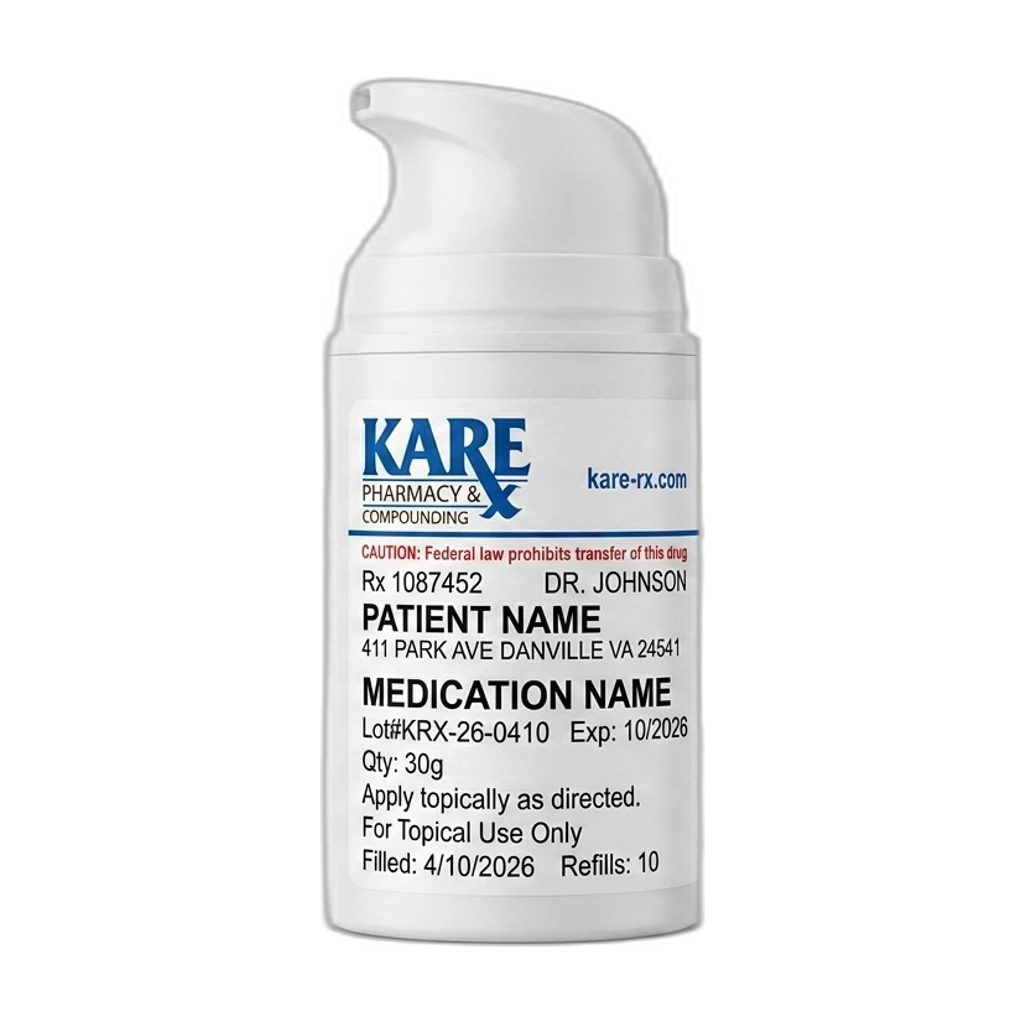
Pricing & Options
Sign in to see instant pricing
Available Strengths (3)·Most prescribed
Active Ingredients
Important Disclaimer
These statements have not been evaluated by the Food and Drug Administration (FDA). Compounded products are not FDA-approved and are not intended to diagnose, treat, cure, or prevent any disease. Individual results may vary. The information provided is for educational purposes only and should not be considered medical advice. Always consult with your healthcare provider before starting any new treatment.
Clinical Information
Evidence-based details for healthcare providers
Use as directed by your healthcare provider. Apply a thin layer only to the areas being treated and avoid getting it in your eyes, mouth, or inside your nose. Wash your hands after applying unless your hands are the treated area. If you miss a dose, apply it when you remember unless it is close to your next dose; do not apply extra to make up for a missed dose. Your healthcare provider will decide how long you should use this medication and when to stop or take breaks.
This cream works in several ways to reduce the look of dark patches and calm irritation. Hydroquinone and kojic acid help lower melanin (skin pigment) made in overactive areas by slowing key steps your skin uses to form pigment; this gradually helps spots fade. Tretinoin helps your skin shed old, darker cells faster and promotes new, more even-looking skin; it can also help the pigment medicines work better by improving how they move into the top layers of skin. Triamcinolone reduces redness, itching, and swelling by calming the immune signals in the skin, which may lessen irritation from tretinoin and other ingredients. You may notice early smoothing or mild peeling in 1 to 2 weeks, but fading of dark patches often takes 6 to 12 weeks; results depend on the cause of the dark spots and daily sun protection. Benefits can fade if you stop sun protection or if the trigger (like hormones or sun exposure) continues.
Do not use if you are allergic to triamcinolone, hydroquinone, tretinoin, kojic acid, or any ingredient in the cream (may cause serious rash, swelling, or trouble breathing). Do not use on broken skin, open wounds, or sunburned skin (higher risk of burning and irritation). Do not use on infected skin (such as untreated bacterial, fungal, or viral infection, including cold sores) because the steroid can worsen infections. Do not use for children unless specifically prescribed, as children can absorb more steroid through the skin. Do not use if you are pregnant, trying to become pregnant, or breastfeeding unless your prescriber says it is safe; tretinoin and hydroquinone may pose risks, and the safest option may be to avoid use. Do not use for long periods, over large body areas, or under tight coverings unless your prescriber instructs you, because this increases steroid side effects and skin thinning. Do not use to treat conditions not diagnosed by a healthcare provider, and do not use for general skin lightening.
This medication may interact with other skin products and treatments, mainly by increasing irritation or changing how your skin responds.
Major (avoid unless your prescriber tells you to use them together): Using other strong “peeling” or irritating products at the same time, such as prescription retinoids (tazarotene, adapalene) or acne combinations, can cause severe redness, burning, and peeling.
Moderate (use with caution and ask your prescriber):
- Benzoyl peroxide (common acne products) may increase irritation and can reduce the effect of tretinoin if applied at the same time; if both are needed, your prescriber may separate application times.
- Alpha hydroxy acids (glycolic acid, lactic acid) and salicylic acid can increase stinging and peeling.
- Hair removal creams, waxing, or abrasive scrubs can cause extra burning and skin damage while using this cream.
Sun and light (important): Sun exposure and tanning beds can quickly worsen dark spots and greatly increase burning from tretinoin. Use broad-spectrum sunscreen daily and limit sun exposure.
Alcohol and lifestyle: Alcohol-based toners or astringents can increase dryness and stinging. If your skin becomes very irritated, stop new products and contact your prescriber.
If you use other prescription creams on the same area (including steroid creams), tell your prescriber to avoid too much steroid exposure.
This cream can cause skin irritation, especially during the first 1 to 3 weeks.
Very common (more than 1 in 10 people): dryness, peeling, redness, mild burning or stinging, itching.
Common (1 to 10 in 100 people): increased sensitivity to sunlight, mild swelling, acne-like bumps, lightening of nearby normal skin, patchy irritation.
Uncommon (1 to 10 in 1,000 people): worsening of dark patches from irritation, rash, contact allergy, small visible blood vessels.
Rare but serious (get medical help right away): signs of a severe allergic reaction (hives, swelling of face/lips/tongue, trouble breathing).
Important long-term risks (more likely with high amounts, long use, or covering the area):
- Triamcinolone (steroid): skin thinning, stretch marks, easy bruising, delayed wound healing, worsening infections; rarely, too much steroid can be absorbed and affect the body, especially in children.
- Hydroquinone: rarely, long-term use can cause blue-black or gray-brown darkening of the skin (called ochronosis), which can be difficult to treat. Stop the medication and contact your prescriber if you notice unusual darkening.
Most mild irritation improves as your skin adjusts or after stopping the product. Contact your prescriber if irritation is severe, you develop blisters, or there is no improvement after the timeframe your prescriber expected.
Store at room temperature (68-77 degrees F / 20-25 degrees C) unless your pharmacy label says otherwise. Keep tightly closed and protect from heat, moisture, and direct light; heat and light can reduce strength and increase skin irritation. Do not store in the bathroom or near sinks where humidity is high. Keep out of reach of children and pets. Do not share this medication with anyone else. Dispose of expired or unused cream through a pharmacy take-back program when available; if not available, place the sealed product in a bag with something undesirable (like used coffee grounds) and throw it in the trash, and remove or cover personal information on the label.
Frequently Asked Questions
How long does it take to see results for dark spots or melasma?
Some people notice smoother texture and mild peeling within 1 to 2 weeks. Fading of dark patches often takes 6 to 12 weeks with daily sunscreen use. If you do not see any improvement after the time your prescriber expected, contact them before continuing.
Can I use this cream on my whole face to lighten my skin?
No. This medication should be used only on the specific dark areas your prescriber told you to treat. Using it on normal skin can cause uneven light spots, irritation, and steroid-related skin thinning.
What should I do if my skin burns, turns very red, or peels a lot?
Mild stinging and peeling can happen at first, but severe burning, swelling, blistering, or strong pain is not expected. Stop using the cream and contact your prescriber for advice; they may tell you to take a break, change how often you use it, or switch products. Avoid scrubs and other “peeling” products until your skin calms down.
Do I need sunscreen while using this cream?
Yes. Sun exposure can worsen dark patches and greatly increase irritation from tretinoin. Use a broad-spectrum sunscreen every day, wear a hat when outdoors, and avoid tanning beds.
Can I use other acne or anti-aging products with this cream?
Be careful because many products can increase irritation when combined with tretinoin and hydroquinone. Avoid adding new products like benzoyl peroxide, salicylic acid, glycolic acid, or other retinoids unless your prescriber says it is okay. If you already use other products, tell your prescriber and follow a simple routine to reduce irritation.
Is it safe to use this cream during pregnancy or breastfeeding?
Tell your prescriber if you are pregnant, planning pregnancy, or breastfeeding. Because tretinoin and hydroquinone may pose risks, many prescribers recommend avoiding this combination unless the benefit clearly outweighs the risk. Do not use it on areas that could come into contact with a baby’s mouth.
Why is there a steroid in this cream, and is it safe?
Triamcinolone is included to reduce redness and itching and to help you tolerate the other ingredients. Steroids can thin the skin if used too long, over large areas, or under coverings. Use it only as directed and do not continue longer than your prescriber recommends.
What should I avoid while using this cream?
Avoid tanning beds and limit sun exposure. Avoid waxing, hair removal creams, abrasive scrubs, and alcohol-based toners on the treated area because they can cause burning and skin damage. If you get the cream in your eyes or mouth, rinse well with water.
Related Products
Hydroquinone | Kojic Acid | Tretinoin | Hydrocortisone Cream
This compounded cream is used to lighten dark spots on the skin such as melasma, sun spots, and post-inflammatory hyperpigmentation. It combines four active ingredients that work together to slow down pigment production, speed skin turnover, and calm irritation, helping the skin look more even over time.
Triamcinolone | Hydroquinone | Tretinoin Cream
A compounded topical cream that contains triamcinolone, hydroquinone, and tretinoin. This combination is used under the direction of a licensed healthcare provider for certain skin conditions involving dark spots, uneven tone, and irritation. Because this is a compounded medication, it should be used exactly as prescribed and only for the condition for which it was ordered.
Hydroquinone | Tretinoin | Kojic Acid | Niacinamide | Hydrocortisone Cream
A compounded topical cream that may be prescribed to help improve the look of dark spots and uneven skin tone. It combines ingredients that reduce excess skin pigment, increase skin cell turnover, calm irritation, and support the skin barrier. This medication should be used only under the direction of a licensed healthcare provider because it contains high-strength hydroquinone and a topical steroid.
Hydroquinone | Tretinoin | Kojic Acid | Azelaic Acid | Hydrocortisone
This compounded cream combines five commonly used dermatology ingredients to help reduce dark spots, calm inflammation, and even skin tone. Hydroquinone and kojic acid work together to lighten areas of excess pigment. Retinoic acid speeds up skin cell turnover, which can smooth texture and improve acne. Azelaic acid helps fight redness and bacteria, while a low dose of hydrocortisone eases irritation. Your healthcare provider may prescribe this formula for conditions such as melasma, post-inflammatory hyperpigmentation, or stubborn acne marks.