
Pricing & Options
Sign in to see instant pricing
Available Strength
Active Ingredients
Important Disclaimer
These statements have not been evaluated by the Food and Drug Administration (FDA). Compounded products are not FDA-approved and are not intended to diagnose, treat, cure, or prevent any disease. Individual results may vary. The information provided is for educational purposes only and should not be considered medical advice. Always consult with your healthcare provider before starting any new treatment.
Clinical Information
Evidence-based details for healthcare providers
Use as directed by your healthcare provider. Apply a thin layer to the affected skin and rub in gently. Wash hands after use unless treating the hands. If you miss an application, put it on when you remember unless it is almost time for the next one. Do not apply extra cream to make up for a missed dose.
Coal tar contains hundreds of compounds that slow down the rapid growth of skin cells and reduce skin inflammation. It helps loosen and shed thick scales so new skin can form more evenly. You may start to feel less itching within a few days, but it can take 2–4 weeks of steady use to see a clear drop in redness and scaling. The soothing effect often lasts for several hours after each application.
Do not use if you are allergic to coal tar or any ingredient in this product (can cause rash or swelling). Do not apply to open wounds, infected skin, or severe burns (may worsen damage). Avoid if you have a sunburn or very sensitive skin that reacts strongly to sunlight. Ask your healthcare provider before use if you are pregnant, planning to become pregnant, or breastfeeding. Not for use on children under 2 years old without medical advice.
Using coal tar with other topical products like salicylic acid, sulfur, or corticosteroid creams may increase skin irritation—ask your provider before combining. Coal tar makes skin more sensitive to ultraviolet (UV) light; avoid tanning beds and limit sun exposure, especially if you also receive UV light therapy (PUVA or UVB). Let your provider know about all prescription creams, over-the-counter lotions, and herbal skin products you use so they can check for potential problems.
Very common (more than 1 in 10 people): temporary skin staining or lingering coal tar odor. Common (1–10 in 100): mild burning, stinging, redness, or dry skin at the application site; photosensitivity causing easier sunburn. Uncommon (1–10 in 1,000): folliculitis (small pus-filled bumps), worsening of eczema flare. Rare but serious: severe allergic reaction with hives or swelling, blistering, or intense skin pain—stop use and seek medical help right away. Most mild reactions improve after your skin gets used to the cream or after stopping treatment.
Store at room temperature (68-77°F, 20-25°C). Keep the lid tightly closed to prevent drying out. Protect from direct sunlight, heat, and freezing. Do not store in the bathroom where heat and humidity are high. Keep out of reach of children and pets. Dispose of unused or expired cream through a pharmacy take-back program or seal it in a plastic bag with household trash if no program is available.
Frequently Asked Questions
How often should I apply Coal Tar Cream?
Follow the schedule your healthcare provider gives you. Many people apply once or twice daily, but your doctor may adjust this based on how your skin reacts.
Can I use this cream on my face or genitals?
These areas are more sensitive and can become irritated easily. Only use on the face or genital skin if your healthcare provider specifically tells you to.
When will I start to see improvement?
Itching often eases within a few days, while scaling and redness usually improve within 2–4 weeks. Keep using the cream as directed even if results are slow at first.
Do I need to avoid the sun while using coal tar?
Yes. Coal tar makes skin burn more easily. Wear protective clothing, use broad-spectrum sunscreen, and skip tanning beds during treatment.
The cream leaves a strong smell—can I wash it off?
You can gently wash the area with mild soap and water after the cream has had time to work (usually a few hours or as directed). Do not scrub hard, as that can irritate your skin.
Is Coal Tar Cream safe during pregnancy or breastfeeding?
Limited data are available. Talk with your healthcare provider before using if you are pregnant or breastfeeding so they can weigh the potential benefits and risks.
Related Products
Lidocaine | Tetracaine | Epinephrine Gel
Lidocaine, tetracaine, and epinephrine gel is a compounded topical numbing medicine used on the skin to help reduce pain and discomfort from certain medical procedures. Lidocaine and tetracaine numb the area, and epinephrine helps reduce blood flow at the site to help limit redness and swelling and may help the numbing last longer. This product should only be used exactly as prescribed by a licensed healthcare provider. It is for external use on intact skin unless your prescriber tells you otherwise.
Hydroquinone | Tretinoin | Hydrocortisone Cream
This compounded cream helps fade dark spots, melasma, and uneven skin tone. It combines a skin-lightener (hydroquinone), a vitamin A derivative (tretinoin), and a mild steroid (hydrocortisone) to brighten skin, speed cell turnover, and calm irritation. The formula is made in a pharmacy and used under a prescriber’s guidance.
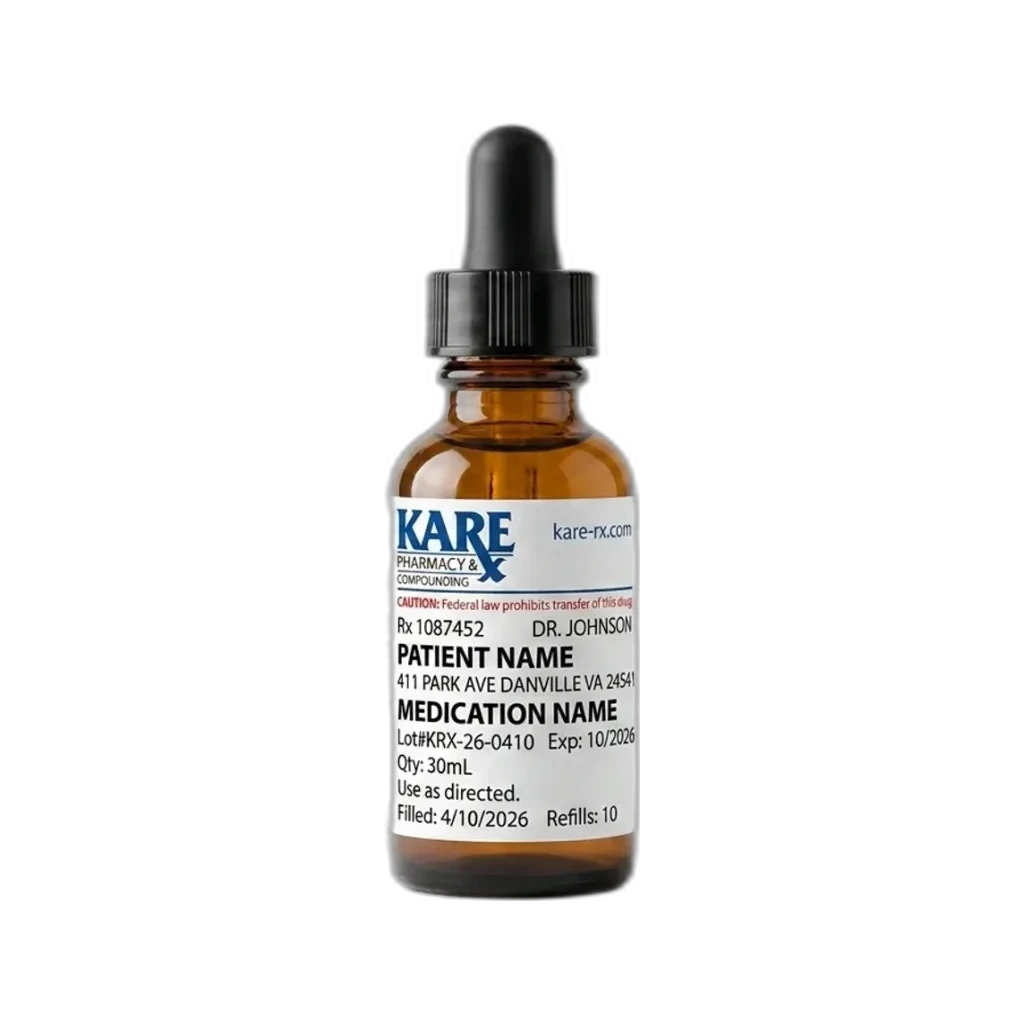
Bimatoprost (Latisse®) Eyelash Solution
Bimatoprost ophthalmic solution 0.03% is used to help people with sparse eyelashes grow longer, thicker, and darker lashes. It is applied to the skin at the base of the upper eyelashes once each day. Results appear gradually over 4–16 weeks and last only while you keep using the medicine.
Hydrocortisone | Dexpanthenol | Niacinamide Gel
A soothing topical gel that blends a mild steroid (hydrocortisone 2.5%) with skin-restoring vitamins (dexpanthenol 5% and niacinamide 4%). It is designed to calm redness, itching, and irritation after cosmetic procedures such as laser, microneedling, or chemical peels. The formula helps reduce swelling while supporting the skin barrier and speeding visible recovery. For external use only under the direction of a licensed healthcare provider.