
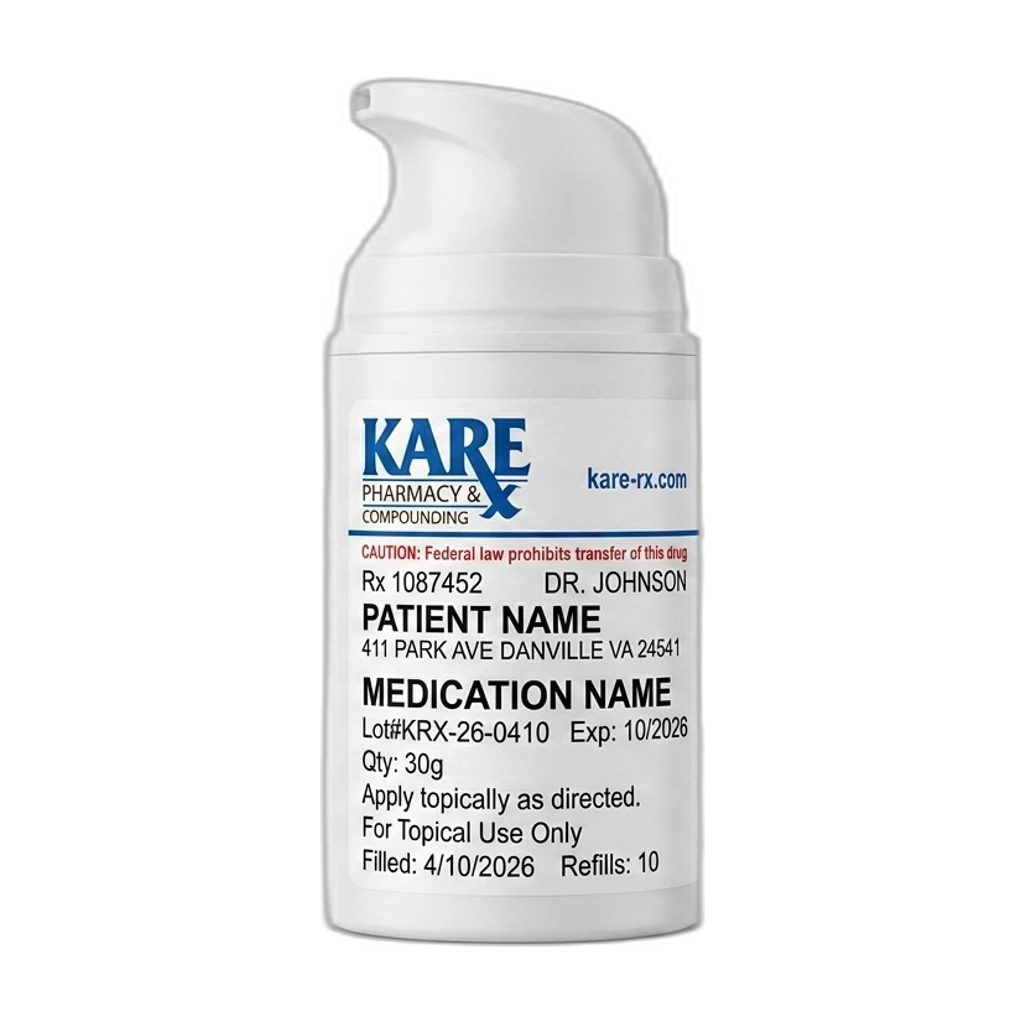
Pricing & Options
Sign in to see instant pricing
Available Strength
Active Ingredients
Important Disclaimer
These statements have not been evaluated by the Food and Drug Administration (FDA). Compounded products are not FDA-approved and are not intended to diagnose, treat, cure, or prevent any disease. Individual results may vary. The information provided is for educational purposes only and should not be considered medical advice. Always consult with your healthcare provider before starting any new treatment.
Clinical Information
Evidence-based details for healthcare providers
A valid prescription from a DEA-registered prescriber is required.
Limited to 5 refills within 6 months of the original prescription date.
Subject to state and federal controlled substance regulations.
Use as directed by your healthcare provider. Apply a thin layer only to the area(s) your prescriber told you to treat, and wash your hands after applying unless your hands are the treated area. Do not apply to broken or irritated skin unless your prescriber tells you to. If you miss an application, use it when you remember unless it is close to your next scheduled application; do not use extra to make up for a missed dose. Your healthcare provider will decide how long you should use this medication.
This cream works in more than one way to help calm pain signals in the skin and nearby nerves. Lidocaine is a local numbing medicine that blocks tiny electrical signals in nerves, which can lessen pain and sensitivity; it can start to work within about 15 to 60 minutes and may last a few hours. Amitriptyline, when used on the skin, may help reduce nerve pain by changing how nerve endings send pain messages; it may take several days to a few weeks of regular use to notice the full benefit. Gabapentin, when used topically, is intended to calm overactive nerve signaling in the painful area; benefit may build over days to weeks. Many people notice less burning, shooting pain, or “pins and needles,” but results vary and some people may not respond.
Do not use if you are allergic to gabapentin, amitriptyline, lidocaine, other “-caine” numbing medicines (such as prilocaine or benzocaine), or any ingredient in the cream; serious allergic reactions can occur. Do not apply to broken skin, open wounds, severe rash, or infected areas unless your prescriber tells you to, because more medicine may absorb into your body and raise side effect risk. Do not use if you have ever had a serious heart rhythm problem and your prescriber has told you to avoid amitriptyline, because amitriptyline can affect heart rhythm if enough is absorbed. Do not use in children unless specifically prescribed, because safe use depends on age, body size, and the area being treated. Tell your prescriber before use if you are pregnant, planning pregnancy, or breastfeeding; topical use may still lead to some absorption, and your prescriber will help weigh risks and benefits. Use with extra caution in older adults and in people with severe liver disease, because side effects may be more likely if the medicine builds up in the body.
This medication may interact with other medicines even though it is applied to the skin, especially if used on large areas, used often, or used under tight bandages/occlusion. Serious: Do not use with MAOI antidepressants (such as phenelzine, tranylcypromine, selegiline, or isocarboxazid) unless your prescriber specifically approves; combining with amitriptyline can cause dangerous side effects. Serious: Medicines that can affect heart rhythm (QT prolongation) such as amiodarone, sotalol, dofetilide, some antibiotics (like azithromycin, clarithromycin, levofloxacin), and some antipsychotics (like haloperidol, quetiapine) may add risk when combined with amitriptyline; tell your prescriber if you take any of these. Moderate: Other medicines that cause sleepiness or slow breathing (opioid pain medicines, benzodiazepines like alprazolam/lorazepam, sleep medicines like zolpidem, muscle relaxers like cyclobenzaprine, and antihistamines like diphenhydramine) may increase drowsiness or dizziness if enough amitriptyline or gabapentin is absorbed; avoid alcohol and use caution with driving. Moderate: Other antidepressants (SSRIs/SNRIs like fluoxetine, paroxetine, sertraline, duloxetine, venlafaxine) can raise the chance of side effects; your prescriber may monitor you more closely. Moderate: Other numbing products (lidocaine patches, lidocaine gels/sprays, benzocaine products) can add up and increase the risk of numbness, dizziness, or heart-related side effects; ask your pharmacist before combining. Herbal and supplements: St. John’s wort, valerian, kava, and melatonin may increase drowsiness; use caution. Tell your healthcare provider and pharmacist about all prescription medicines, over-the-counter medicines, and supplements you use.
Most side effects are local (on the skin) and improve after you wash the area or stop using the cream. Very common/common: temporary burning, stinging, itching, redness, dryness, or rash where applied. Common: numbness or tingling beyond the treated area, skin sensitivity, or mild swelling. Uncommon: dizziness, sleepiness, blurred vision, dry mouth, constipation, or trouble urinating (more likely if applied to large areas or used often). Rare but serious (get emergency help): signs of a severe allergic reaction such as hives, swelling of the face/lips/tongue, severe dizziness, or trouble breathing. Rare but serious: fast or irregular heartbeat, fainting, severe confusion, severe weakness, or seizures, which may happen if too much medicine is absorbed (for example, using on large areas, broken skin, or under tight coverings). If you have new or worsening mood changes, severe sleepiness, or you feel unsafe, contact your healthcare provider right away.
Store at room temperature (68-77 degrees F / 20-25 degrees C) unless your pharmacy label tells you differently. Keep away from heat, direct sunlight, and moisture. Do not store in the bathroom or near a kitchen sink. Keep the container tightly closed when not in use and keep out of reach of children and pets. Do not freeze unless directed by the pharmacy. Dispose of expired or unused cream through a pharmacy take-back program when available; if not available, place the cream in a sealed bag with an unwanted material (like coffee grounds or cat litter) and throw it in the household trash, and remove personal information from the label.
Frequently Asked Questions
How do I apply this pain cream?
Apply a thin layer to the painful area exactly as your prescriber directed. Do not cover with tight bandages or plastic wrap unless your prescriber tells you to, because that can increase absorption and side effects. Wash your hands after applying, and avoid getting it in your eyes, mouth, or nose.
How fast will it work, and how long does it last?
The lidocaine part may start to numb the area within about 15 to 60 minutes and may last a few hours. The gabapentin and amitriptyline parts often take several days to a few weeks of regular use for the best effect. If you do not notice any improvement after a reasonable trial, contact your prescriber.
Can I use this cream with a heating pad or right after a hot shower?
Avoid heat (heating pads, hot baths, saunas) on the treated area because heat can increase how much medicine goes into your body. More absorption can raise the risk of dizziness, sleepiness, or heart-related side effects. If you want to use heat for comfort, ask your prescriber first.
Can I put it on broken skin or near a wound?
Do not apply to broken, bleeding, infected, or severely irritated skin unless your prescriber specifically told you to. Damaged skin can absorb more medicine and increase side effects. If the area becomes very red, blistered, or painful, stop using it and contact your prescriber.
What should I do if I feel dizzy or very sleepy after using it?
Stop using the cream and sit or lie down until you feel better. Do not drive, drink alcohol, or take other medicines that make you sleepy unless your prescriber approves. Contact your healthcare provider, especially if symptoms are strong, keep happening, or you used the cream on a large area.
Can I use other lidocaine products at the same time?
Ask your pharmacist or prescriber first. Using multiple lidocaine products (like patches, gels, sprays, or throat numbing products) can add up and increase the risk of side effects. Always follow the total use directions given by your healthcare team.
Is this cream FDA-approved?
This exact combination and strength is a compounded medication, which means it is mixed by a pharmacy based on a prescription. Compounded medications are not FDA-approved as a combined product. Your prescriber chose it because it may be helpful for your specific needs.
Related Products
Shingles Relief Cream
This compounded cream combines gabapentin, ketoprofen, amitriptyline, lidocaine, and acyclovir to help ease the pain, burning, and itching that often come with shingles (herpes zoster). The blend targets nerve pain, reduces inflammation, numbs the skin, and delivers an antiviral effect right where the rash appears. It is made for topical use only and is not meant to treat shingles systemically. Always use exactly as prescribed by your healthcare provider.
Diazepam | Gabapentin | Baclofen | Lidocaine Cream
Diazepam | Gabapentin | Baclofen | Lidocaine Cream is a compounded topical preparation used in pain-management regimens when a prescriber wants a customized combination of ingredients in a topical base. Lidocaine is a local anesthetic that can help reduce sensation at the application site, while gabapentin, baclofen, and diazepam are ingredients commonly selected by prescribers for treatment plans involving nerve-related discomfort, muscle tightness, or spasm.
Ketoprofen | Gabapentin | Baclofen | Lidocaine Cream
A compounded topical cream that combines an anti-inflammatory drug (ketoprofen), two nerve and muscle pain modulators (gabapentin and baclofen), and a local anesthetic (lidocaine) to help relieve localized muscle, joint, and nerve pain without the need for high-dose oral medicines.
Ketamine | Ketoprofen | Gabapentin | Clonidine | Lidocaine Cream
This compounded cream combines five active drugs that work together to help ease nerve and muscle pain when applied to the skin. It is made for patients who have chronic pain that has not improved with single-drug treatments. Because the medicine stays mostly in the skin and tissues where it is applied, it may lower the chance of whole-body side effects seen with oral pain pills.