
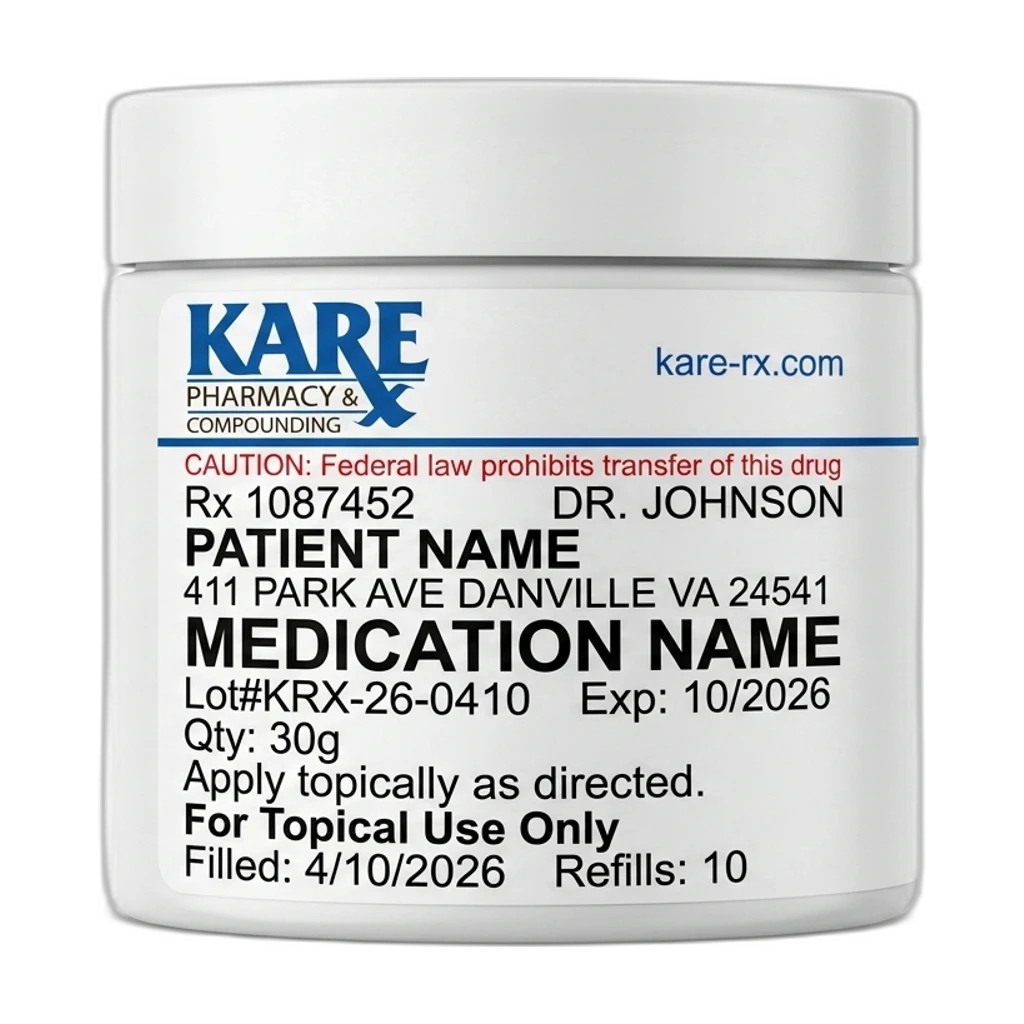
Pricing & Options
Sign in to see instant pricing
Available Strength
Active Ingredients
Important Disclaimer
These statements have not been evaluated by the Food and Drug Administration (FDA). Compounded products are not FDA-approved and are not intended to diagnose, treat, cure, or prevent any disease. Individual results may vary. The information provided is for educational purposes only and should not be considered medical advice. Always consult with your healthcare provider before starting any new treatment.
Clinical Information
Evidence-based details for healthcare providers
Use as directed by your healthcare provider. Apply a small amount to the affected area as instructed, usually for several weeks. Wash your hands before and after use. If you miss a dose, use it as soon as you remember unless it is close to your next dose. Do not use extra medicine to make up for a missed dose.
This ointment contains diltiazem, a medicine that relaxes smooth muscle and helps widen nearby blood vessels. When applied to the anal area, it can lower the tightness and spasm of the anal muscle, which may reduce pain and improve blood flow to the fissure. Better blood flow can support healing over time. Some people feel less pain within a few days, but healing often takes several weeks of regular use. If symptoms are not improving after a few weeks, contact your healthcare provider.
Do not use if you are allergic to diltiazem or any ingredient in this ointment (signs can include rash, hives, itching, swelling, or trouble breathing). Do not use on severely broken skin, active infection, or open wounds in the area unless your prescriber tells you to, because it may worsen irritation or delay proper treatment. Tell your healthcare provider before use if you have very low blood pressure, certain heart rhythm problems (such as sick sinus syndrome or heart block) unless you have a pacemaker, or heart failure, because diltiazem can affect heart rate and blood pressure even when used topically. If you are pregnant, planning pregnancy, or breastfeeding, use only if your prescriber decides the benefits outweigh the risks, since safety information for rectal/topical use is limited. Do not use in children unless specifically prescribed by a pediatric specialist.
Even though this medicine is applied locally, small amounts may be absorbed and could add to the effects of other medicines. Moderate interaction: blood pressure or heart medicines (such as beta-blockers like metoprolol, atenolol; and other calcium channel blockers like verapamil, amlodipine) may increase the chance of slow heartbeat, dizziness, or low blood pressure—contact your prescriber if you feel faint or your heart rate feels unusually slow. Moderate interaction: medicines that strongly affect liver enzymes (such as clarithromycin, erythromycin, ketoconazole, itraconazole, ritonavir, and grapefruit products) may increase diltiazem levels and side effects—ask your pharmacist before using these. Caution: alcohol can worsen dizziness or lightheadedness in some people. Tell your healthcare provider about all prescription and over-the-counter medicines, vitamins, and herbal supplements you use.
Common (may affect 1 to 10 people out of 100): itching, burning, stinging, or mild irritation where applied; mild headache. Uncommon (may affect 1 to 10 people out of 1,000): dizziness, flushing, nausea, or feeling lightheaded, especially if more medicine is used than directed. Rare but serious: allergic reaction (hives, rash, swelling of face/lips/tongue, trouble breathing), fainting, very slow heartbeat, or severe weakness—get emergency help right away. Local irritation often improves within a few days; if it is severe, lasts more than 1 week, or you notice bleeding, pus, fever, or worsening pain, contact your healthcare provider.
Store at room temperature (68-77F, 20-25C) unless your prescription label says otherwise. Keep tightly closed and protect from heat, moisture, and direct light. Do not store in the bathroom. Keep out of reach of children and pets. Do not share this medication with anyone. Dispose of unused or expired ointment through a pharmacy take-back program when available; if not available, place it in a sealed bag (mixed with an undesirable material like used coffee grounds) and throw it in the household trash, and remove personal information from the label.
Frequently Asked Questions
What is this ointment used for?
This compounded diltiazem ointment is commonly prescribed to help treat anal fissures by reducing pain and helping the area heal. It works by relaxing the anal muscle and improving blood flow. Use it only for the condition and duration your prescriber ordered.
How long does it take to work?
Some people notice less pain within a few days of regular use. Healing often takes several weeks because the skin needs time to repair. If you are not improving after a few weeks, contact your healthcare provider.
How should I apply it?
Apply a small amount as directed by your healthcare provider, usually to the affected area just inside or around the anus. Wash your hands before and after you apply it. Use only the amount prescribed, since using more may increase side effects like headache or dizziness.
What side effects should I watch for?
The most common side effects are mild burning, itching, or irritation where you apply it and headaches. Stop using it and get medical help right away if you have signs of an allergic reaction or feel faint. Call your prescriber if side effects are strong, do not improve, or your symptoms get worse.
Can I use this if I take blood pressure or heart medicines?
Tell your prescriber and pharmacist if you take medicines for blood pressure or heart rhythm, such as beta-blockers or other calcium channel blockers. Small amounts of diltiazem may be absorbed and could add to the effects of those medicines. Seek advice right away if you feel very dizzy, faint, or notice a very slow heartbeat.
Can I use it during pregnancy or breastfeeding?
Tell your healthcare provider if you are pregnant, planning to become pregnant, or breastfeeding. Safety information for this type of use is limited, so your provider will weigh the benefits and risks for you. Use it only if it has been specifically prescribed for you.
What else can I do to help an anal fissure heal?
Your healthcare provider may recommend drinking more water, eating more fiber, and using a stool softener to avoid straining. Warm sitz baths may help with comfort. Do not start new rectal products unless your provider says they are okay.
How should I store and dispose of it?
Store it at room temperature, away from heat, moisture, and direct light, and keep the cap tightly closed. Keep it out of reach of children and pets. Dispose of it through a pharmacy take-back program when possible, or seal it in a bag and place it in the trash if take-back is not available.
Related Products
Diltiazem | Lidocaine Ointment
This compounded ointment combines diltiazem 2% and lidocaine 3% to ease pain and help healing in the anal area. Diltiazem relaxes the tight muscle around the anus, which can improve blood flow and reduce pressure on fissures or hemorrhoids. Lidocaine provides fast numbing relief so you feel less burning, itching, or pain while the area heals. Your healthcare provider may prescribe this ointment when over-the-counter treatments have not given enough relief.
Diltiazem | Lidocaine Cream
A compounded topical cream that contains diltiazem and lidocaine. It is commonly prescribed to help relax the internal anal muscle and reduce pain in patients with anal fissures. Diltiazem helps lower muscle tightness in the area, while lidocaine provides temporary numbing for pain relief. This is a compounded medication and should be used only as directed by a licensed healthcare provider.
Lidocaine | Tetracaine Spray
Topical anesthetic spray compounded with lidocaine and tetracaine to help numb the skin before certain minor procedures. This product is used on intact skin only and should be used exactly as directed by a licensed healthcare provider. It may help reduce pain from needle sticks, laser procedures, or other office-based skin treatments. This is a compounded preparation and has not been reviewed by the FDA for safety, effectiveness, or quality in the same way as an FDA-approved drug product.
Nifedipine | Lidocaine | Hydrocortisone Cream
This compounded rectal cream combines nifedipine, lidocaine, and hydrocortisone to ease pain, itch, and swelling caused by anal fissures or hemorrhoids. Nifedipine relaxes the tight muscles around the anus to improve blood flow and speed healing. Lidocaine numbs the area for quick pain relief. Hydrocortisone lessens redness, swelling, and itching.